Back to work

Robotics / 2023 / Validated on hardware

Assistive Perception System for a Quadruped Robot

Real-time ROS perception and audio-guidance system developed for a Unitree Go1 guide-dog concept, combining object detection, scene context, and synchronised spoken cues.

Role

Computer vision and perception lead

Organisation

MSc Robotics group project, Heriot-Watt University Dubai

Disciplines

Robotics / Perception

Status

Validated on hardware

Assistive Perception System for a Quadruped Robot preview

What this system solves

Existing assistive guidance is rigid, expensive, and rarely contextual. A quadruped platform with reliable scene perception and clear audio cues could expand assistive options — but only if perception is dependable and the human-facing feedback is intelligible in real environments.

System overview

I led the computer vision and perception integration on a team project around a Unitree Go1 quadruped. The system consumes camera frames, runs YOLO-based detection through darknet_ros, publishes perception events on ROS topics, and drives an audio feedback layer (sound_play) that warns the user about obstacles and nearby objects.
Architecture

System flow

Cameradarknet_ros / YOLOROS topicsound_play
  • Camera frames feed a perception node running YOLO inference via darknet_ros.
  • Detections are published on ROS topics with class labels and bounding boxes.
  • An audio bridge subscribes to perception events and synthesises spoken cues through sound_play with debouncing so the user is not overwhelmed.
  • The Unitree Go1 stack handles locomotion; perception and audio operate as parallel ROS subsystems.

Engineering decisions

Perception is a separate subsystem, not a locomotion concern

Decoupling perception from the Unitree locomotion stack meant detection quality could be evaluated and tuned independently, and the same perception layer could be reused in simulation and on hardware.

Audio feedback is debounced

Raw detection rates produce unhelpful, repetitive announcements. The audio bridge throttles and dedupes events so cues remain intelligible.

What I built

  • Led the computer-vision and perception integration for the quadruped guide-dog concept.
  • Integrated darknet_ros YOLO detection into the ROS graph and exposed perception events on dedicated topics.
  • Wrote the bridge between perception events and the sound_play audio layer so detections become intelligible cues.
  • Participated in simulation and physical-robot validation runs and triaged sensor / perception failures.

Validation and results

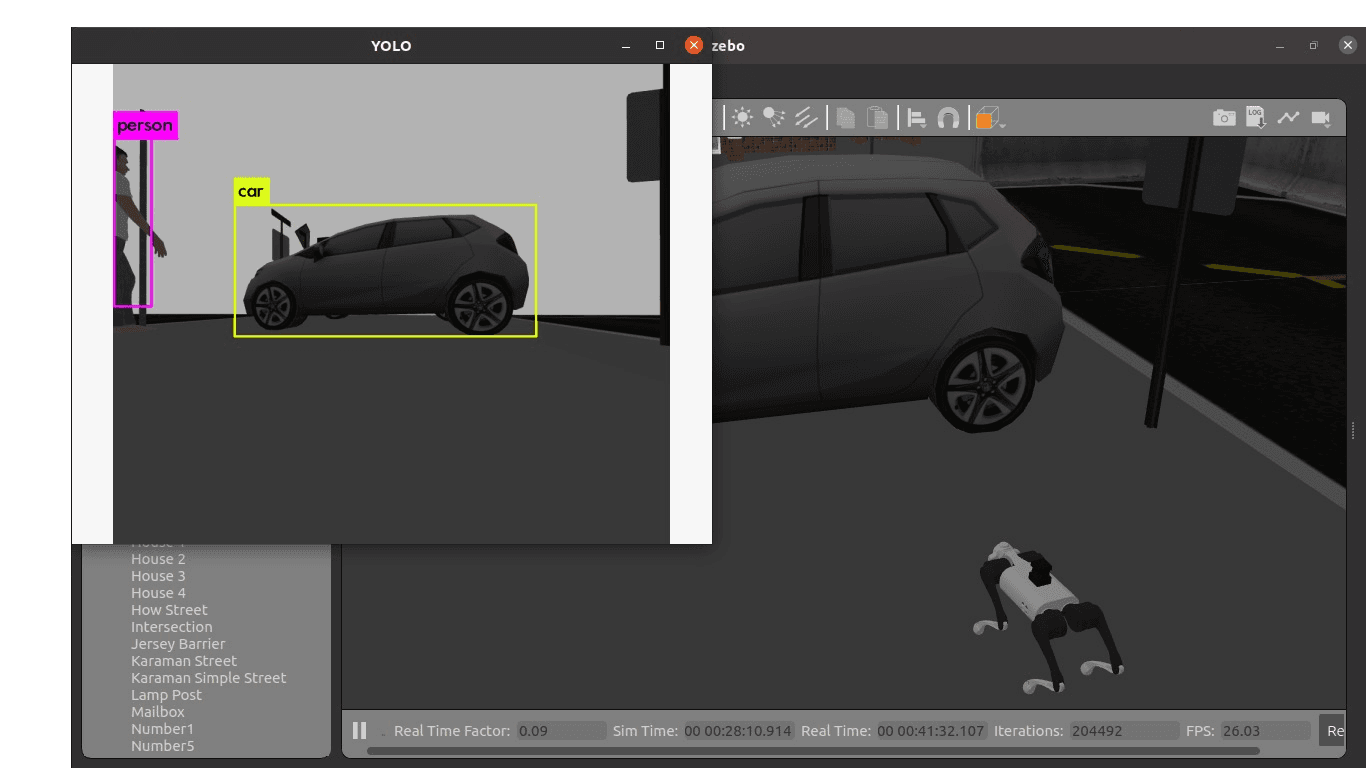
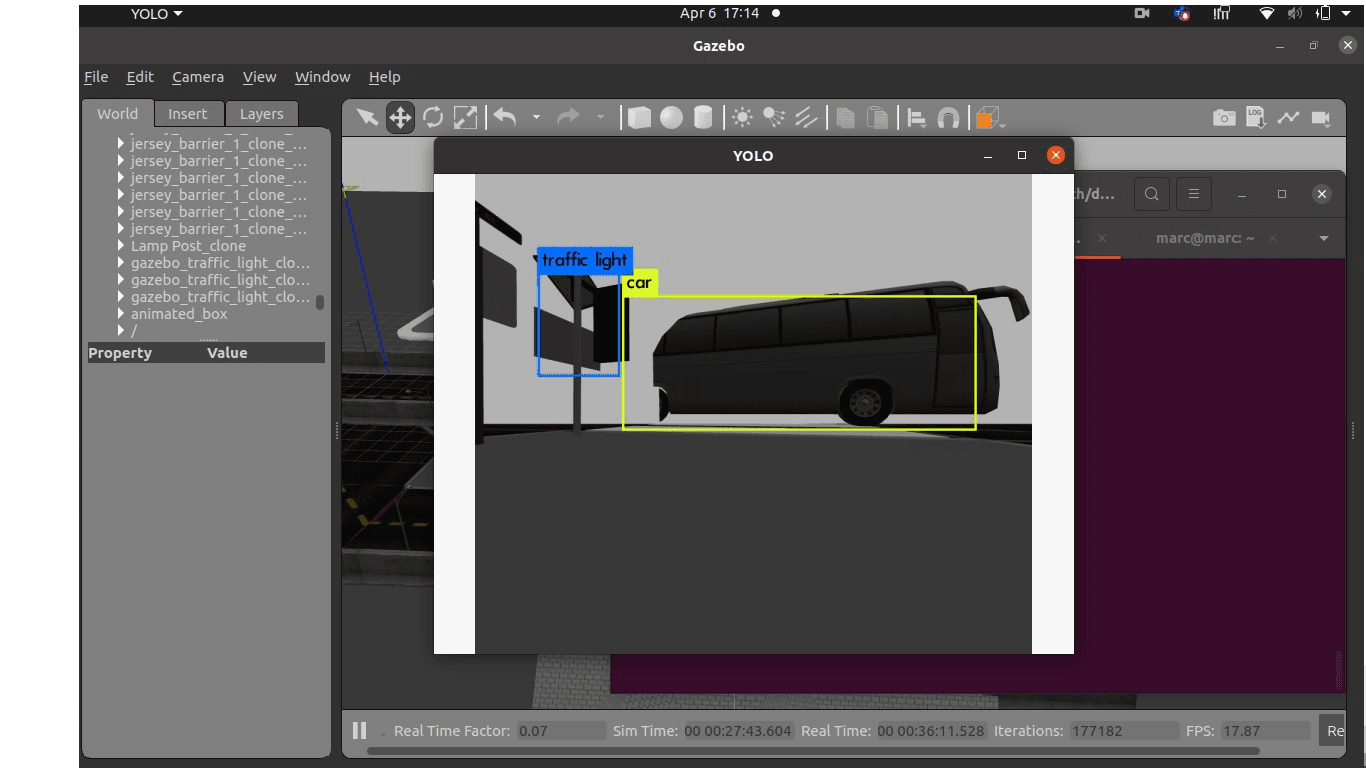
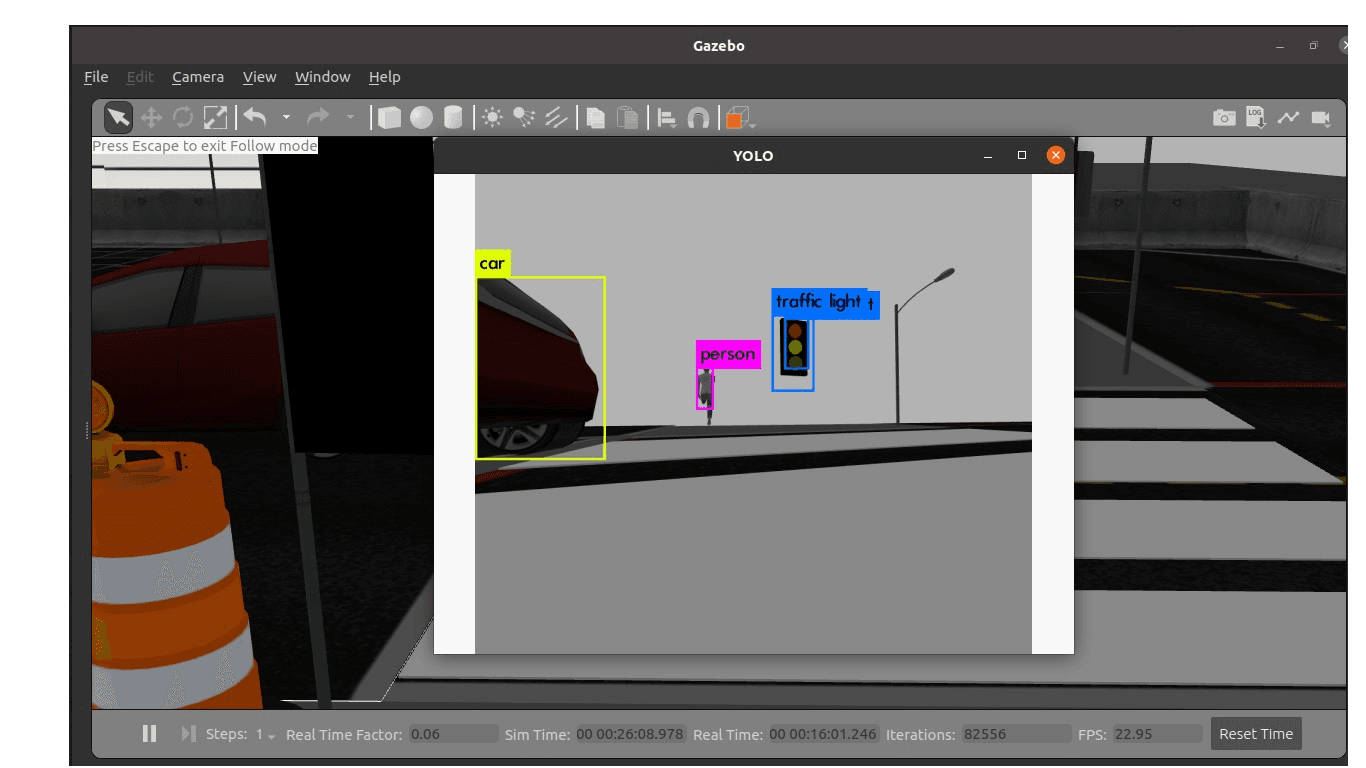
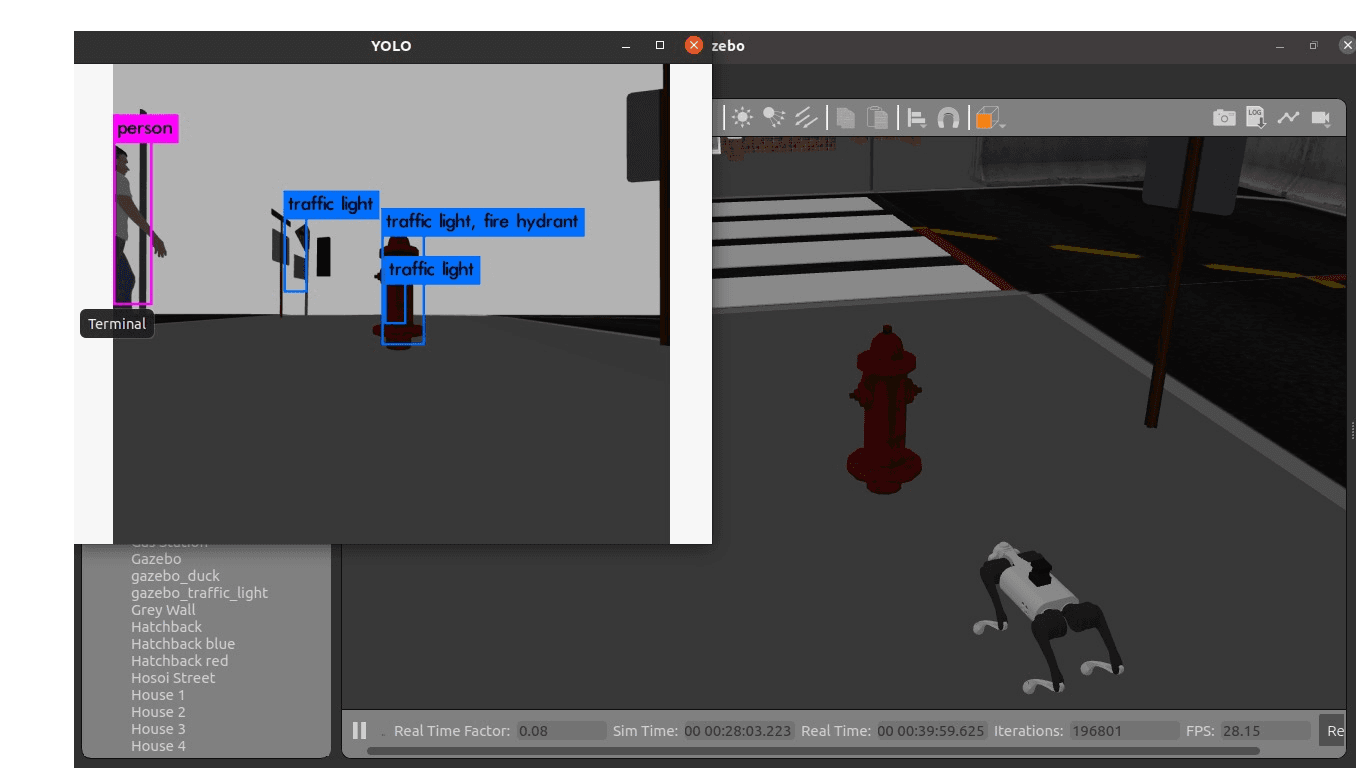
  • Verified perception behaviour in Gazebo across multiple simulated environments.
  • Validated the perception + audio loop on the physical Unitree Go1.

Limitations

  • Perception relies on pre-trained YOLO weights; long-tail obstacle categories were not specifically tuned.
  • Audio cue grammar is intentionally simple — a richer affordance layer would benefit from user research.
  • This was a team project — locomotion and lower-level control are not my contribution and the README credits the team and upstream libraries.

What would come next

  • User study with visually impaired participants to evaluate cue intelligibility and trust.
  • Switch to depth-aware perception for better obstacle distance estimates.
  • Failsafe behaviours when perception confidence drops below a tunable threshold.

Media gallery

Simulation scene with perception overlays
Obstacle detection and path context
Perception-to-audio pipeline snapshot
Navigation run in simulated environment